

Gum Diseases and Treatments
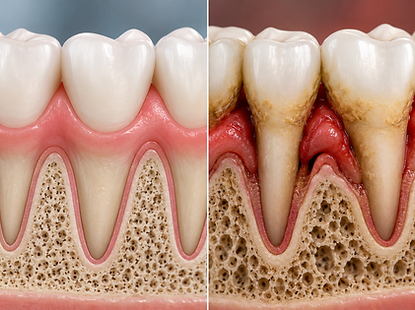
Gum disease can affect not only the gums but also the bone and supporting tissues surrounding the teeth. Gum bleeding, swelling, bad breath, gum recession, tooth loosening, and bone loss can all be symptoms of periodontal disease.
At Sone Oral and Dental Health Clinic, periodontal treatments are planned individually for each patient, taking into account the type and severity of the disease, existing bone support, the condition of the teeth, and the patient's oral hygiene.
What Causes Gum Bleeding?
Gum bleeding is one of the most common symptoms of gum disease. Microbial dental plaque, which accumulates particularly on the teeth and gum margins, can cause inflammation in the gums, leading to redness, swelling, and bleeding during brushing.
Regular bleeding of healthy gums is not expected. In cases of persistent gum bleeding, it's important not only to stop the bleeding but also to identify the underlying cause.
What is the difference between gingivitis and periodontitis?
Gingivitis is an early-stage gum disease in which inflammation is primarily limited to the gum tissues and can be controlled with appropriate treatment.
Periodontitis is a more advanced condition in which the disease progresses to the supporting tissues surrounding the tooth, leading to periodontal pocket formation, attachment loss, and bone loss in the tooth's supporting tissue.
Periodontitis may not always cause significant pain in its early stages, so the disease can progress unnoticed. Therefore, periodontal examination and necessary radiographic evaluations are important.
Bone Loss in Gum Disease
As periodontitis progresses, loss of alveolar bone surrounding the teeth can occur. This condition, sometimes referred to by patients as "bone loss around the teeth," can lead to tooth mobility and loss of function in later stages.
The extent and nature of bone loss are assessed through clinical periodontal examination and radiographic imaging. The primary goal of treatment is to control periodontal infection and inflammation, preserve existing supporting tissues, and, in appropriate cases, evaluate treatment options for restoring lost periodontal tissue.
Tartar Removal, Initial Periodontal Treatment, and Deep Cleaning
The first stage of periodontal treatment aims to remove plaque, tartar, and bacterial buildup on the teeth and root surfaces. Teaching patients proper oral hygiene practices is also an important part of the treatment.
Depending on the stage of the disease, in addition to professional dental cleaning, subgingival instrumentation and root surface cleaning may be applied to remove deposits under the gums. After treatment, the response of the periodontal tissues is re-evaluated, and necessary further treatments are decided upon.
In periodontal treatments, which patients often refer to as "deep gum cleaning" or "curettage," the goal is to remove bacterial buildup found within periodontal pockets and on root surfaces.
The scope of treatment is determined by the depth of the periodontal pockets, the severity of inflammation, and the existing bone support. If necessary, the procedure can be performed under local anesthesia and the treatment can be divided into different sessions.
Can a loose tooth be saved?
A loose tooth doesn't always mean it needs to be extracted. The cause and degree of tooth mobility, the remaining periodontal bone support, root structure, infection status, and the functional load on the tooth should all be evaluated together.
At Sone Oral and Dental Health Clinic, we consider tooth extraction as a last resort, aiming to preserve natural teeth in appropriate cases through periodontal and restorative treatments. However, extraction may be necessary for teeth with advanced supporting tissue loss that cannot be preserved.
Advanced Periodontal Surgical Treatments and Bone Grafts
Surgical periodontal treatments may be considered when persistent deep periodontal pockets or specific bone defects are present after initial periodontal treatment.
The goal of periodontal surgery is to provide better access to root surfaces and periodontal defects, facilitate control of diseased tissues, and, in appropriate cases, perform procedures aimed at reconstructing periodontal tissues. The surgical method to be applied is determined according to the characteristics of the patient and the area in question.
In certain types of periodontal bone defects caused by periodontitis, regenerative periodontal treatments can be considered when appropriate case selection is made.
Depending on the case, these treatments may utilize bone grafts, barrier membranes, and biomaterials that support periodontal regeneration. The goal is not to completely reverse every bone loss, but to support the regeneration of periodontal supporting tissues in anatomically suitable defects.
Let's leave this sentence as it is; let's avoid using an overly ambitious statement like "we're bringing back the lost bone."
Is Gum Recession Treatable?
Gum recession can expose the root surfaces of teeth, make teeth appear longer, and cause sensitivity or aesthetic problems in some patients.
After evaluating the cause of recession and anatomical features, in some cases, the goal may be to cover the root surface and strengthen the surrounding soft tissues using connective tissue grafting, free gingival grafting, or different mucogingival surgical techniques.
Not every case of gum recession is treated with the same surgical method, and the amount of root surface coverage that can be achieved may vary depending on the specifics of the case.
Periodontal Disease and Peri-implantitis Around Implants
Inflammatory diseases can develop in the tissues surrounding implants, just as they do in natural teeth. Inflammation limited to the soft tissues around the implant is called peri-implant mucositis, while a condition accompanied by progressive bone loss supporting the implant is called peri-implantitis.
If bleeding, swelling, discharge, or radiographic bone loss is observed around the implant, evaluation of the implant and surrounding tissues is necessary. Treatment may include non-surgical or, if necessary, surgical approaches, depending on the severity of the condition and the state of the surrounding tissues.
Gum and Periodontal Treatments in Avcılar
Sone Ağız ve Diş Sağlığı Polikliniği'nde Avcılar'da diş eti hastalıkları, gingivitis, periodontitis, periodontal kemik kaybı, diş eti çekilmesi ve implant çevresi hastalıklarının değerlendirme ve tedavilerini gerçekleştiriyoruz.
Tedavi planlamasında yalnızca mevcut şikâyetin giderilmesini değil, doğal dişlerin ve onları destekleyen periodontal dokuların mümkün olduğunca uzun süre sağlıklı şekilde korunmasını hedefliyoruz.
Kullandığımız Greft ve Membran Sistemleri
Periodontal rejenerasyon ve kemik artırımı gerektiren uygun vakalarda, kemik defektinin yapısına ve planlanan cerrahi yönteme göre farklı greft ve membran seçeneklerinden yararlanıyoruz. Kliniğimizde EthOss, Geistlich Bio-Oss® ve Straumann gibi uluslararası üreticilerin rejeneratif biyomateryallerini kullanıyoruz. Greft ve membran seçimi; kemik kaybının miktarı ve şekli, uygulama bölgesinin anatomik özellikleri ve planlanan tedavi doğrultusunda vakaya özel olarak belirlenmektedir.


